
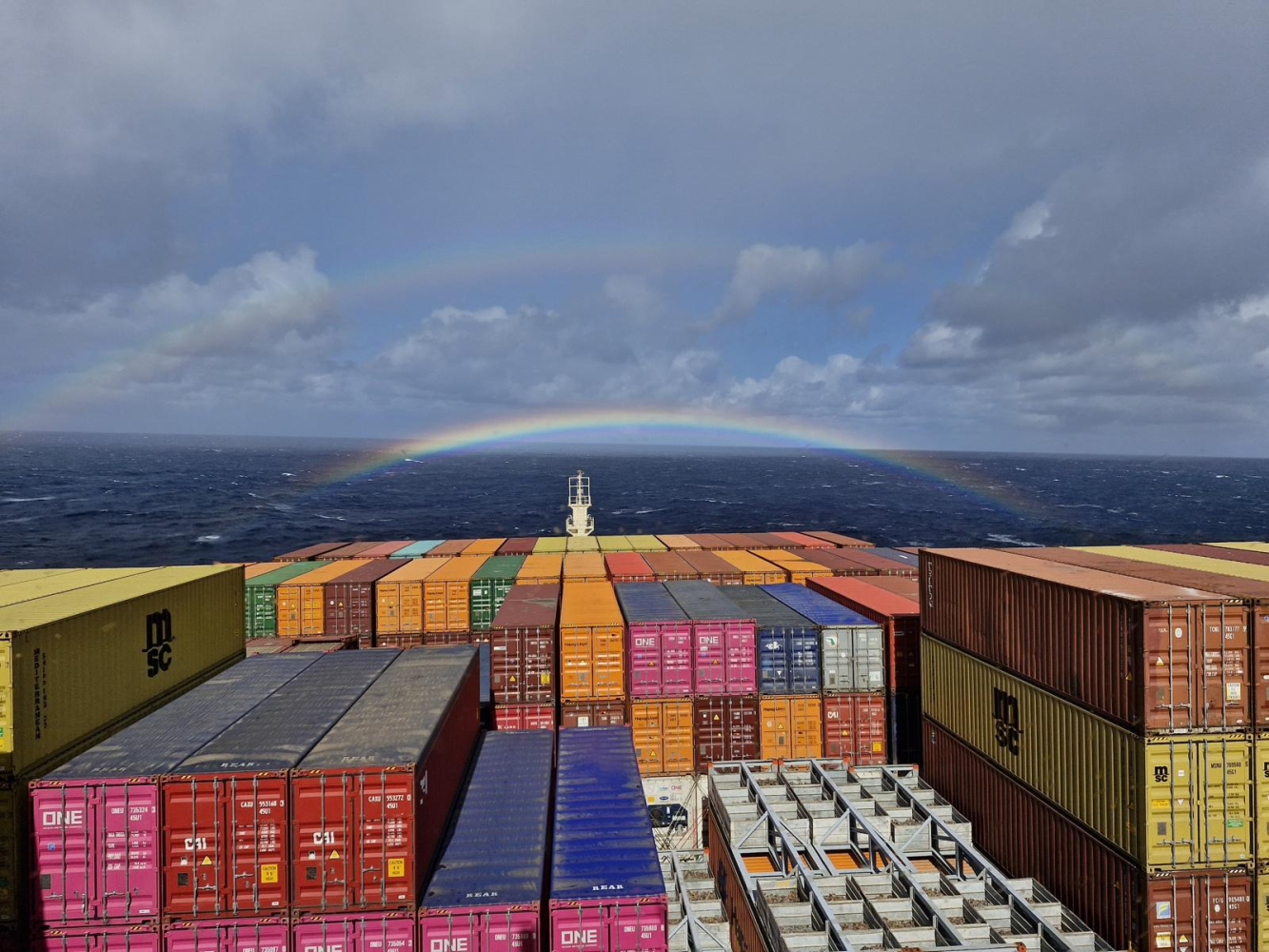
Container shipping is built on precision. Schedules are tight, ports are busy, and the margin for error at sea is minimal. Behind the scenes, safe and reliable voyages depend on careful passage planning, disciplined watchkeeping, and a bridge team that stays focused even when conditions change quickly.
In this Q&A, Chris, Second Officer in Zodiac Maritime’s container fleet, shares what the role involves on board, from route planning and maintaining charts to supporting safety culture as the ship’s Safety Officer. Chris also brings a valuable second perspective: he spends time on shore in Zodiac Maritime’s London office working in Container Operations, giving him a clearer view of how decisions made on land connect with the realities at sea.
What is your role at Zodiac Maritime, what does your remit cover, and what are your main responsibilities?
I’m in a slightly unusual position because I have two roles within Zodiac Maritime, which complement each other well.
My main role is Second Officer on the container fleet. Onboard, I’m responsible for the work that keeps the bridge team confident in the strategy: passage planning and making sure our digital and paper charts and publications are always current. I also act as the ship’s Safety Officer, which means ensuring and encouraging the very highest possible safety standards and culture day-to-day – not just through procedures, but by keeping standards consistent, speaking up early, and making safety an integral part of how we work rather than something separate.
Alongside my sea role, I currently spend time in Zodiac Maritime’s London office within the Container Operations department. I look after a number of vessels and I’m learning what it takes to manage operations from shore, including how you support ships, anticipate issues, and keep the wider plan moving. Seeing both sides helps you understand what “great” looks like across the whole system.
How would you describe your role to someone outside the industry in one sentence?
I’m part of the team responsible for plotting the ship’s course and steering a 366-metre vessel safely, ensuring we deliver cargo on time while protecting the crew, the ship and the environment.
What does a typical day look like for you?
At sea, my day is built around watchkeeping. I keep navigation watch from 12:00 to 16:00 and 00:00 to 04:00. Outside those watches, there’s plenty that still needs doing. I carry out safety rounds, keep the hospital in good order, and stay on top of bridge equipment so there are no surprises when you need systems to work exactly as expected.
It’s also important to make time for the human side of life at sea. You can be working hard and still make space to stay connected with people. On board, even something as simple as a game of basketball with the crew on Sundays helps morale and keeps teams feeling like a team.
In port, the rhythm changes again. The focus becomes monitoring cargo operations and making sure everything is progressing according to the loading plan. It’s a different kind of intensity, but it demands the same attention to detail because you’re dealing with a live operation and tight timelines.
What do you enjoy most about working at Zodiac Maritime?
I genuinely value being able to spend time both at sea and in the office, because it gives you a full picture of the company and the decisions that sit behind each voyage.
I also enjoy the challenge. Some weeks it’s preparing for Port State Control, other times it’s supporting Flag or Class inspections, but the common thread is working with the crew to meet the standard every time. And then there’s the best part of ship life: the friendships you build. It’s a small world in the end, and it’s always good when you meet someone again on a different vessel months or years later.
There’s also a sense of pride in being part of the Zodiac family, you feel it both on board and shoreside when people are aligned on how they want to operate.
What is a memorable moment or achievement you are most proud of?
A moment that really stands out was joining a vessel for the first time as a newly qualified Third Officer and taking the ship out of Shanghai towards South Korea during the height of the Chinese fishing season.
It was one of those situations where you quickly realise what the job actually means in practice. You’ve trained for it, but in that moment the responsibility becomes real. You’re responsible for navigating safely, managing risk, supporting the bridge team, and knowing that you have a crew, a ship, and a huge amount of cargo relying on good decisions. It was a milestone for me because it felt like the point where the dream turned into the day-to-day reality of being a navigation officer.
What is one thing people often misunderstand about your role, or about shipping?
A common misunderstanding is that navigation is mainly about standing on the bridge and looking out of the window.
What people don’t see is the preparation before a vessel ever sets sail. There are endless hours of planning to build a route that reflects the latest information, taking into account weather, currents, traffic patterns, restrictions, hazards, and obstructions. You’re trying to produce an optimised route, but also one that is safe and realistic.
Then, once you’re underway, you’re often navigating in increasingly dense traffic environments. Places like China during fishing season are a good example… It’s busy, it changes quickly, and you need a bridge team that stays alert and coordinated. Add to that the routine work of ensuring bridge equipment is maintained and functioning so you have confidence in your position and your systems throughout the voyage. A lot of the work is invisible, but it’s exactly what keeps a ship operating safely and efficiently.
What advice would you give to someone considering a career in shipping?
I’d say go for it. It’s a dynamic industry with global opportunities and a lot of variety in the work.
You get to see the world and sometimes experience places in ways you don’t expect. For example, I’ve done things like shark diving in South Africa and a safari while in Durban. But beyond travel, the biggest benefit is the people – you work with crews from all over the world, and you’re constantly learning.
And the career doesn’t stop at sea. If you reach a point where you’ve had enough ship life, there are many shore-based roles you can move into. Having sea-time experience gives you a strong foundation for those positions, because you understand what the job looks like in reality.
What makes a high-performing team in your area of responsibility?
On container vessels, a high-performing bridge team is defined by its ability to keep operations safe and efficient consistently.
You get there through technical proficiency, but also through bridge resource management, proactive situational awareness, and strong leadership and mentorship. The best bridge teams are the ones where people communicate clearly, challenge assumptions respectfully, and support each other. It’s not about one person doing everything, it’s about a team operating to a shared standard.
What does good coordination look like between ship and shore in your area?
Good coordination between ship and shore is crucial. It comes down to clear communication, shared planning, and being aligned on the same objective: running the vessel to the highest standard possible.
When ship and shore are operating as one team, changes are easier to manage, and support feels more practical. That alignment makes a real difference when conditions shift quickly or when decisions need to be made fast.
What does ‘operational excellence’ mean in day-to-day terms for your team?
For the bridge team, operational excellence is a proactive, standardised and safe operating mindset.
In day-to-day terms, it means doing the task properly the first time, sticking to the right routines, and always looking for small improvements that make operations more efficient without compromising safety. It’s the accumulation of how the bridge team plans, communicates, checks, and follows through – watch after watch, voyage after voyage.
Chris’s experience underlines a practical reality of container shipping, how performance is built through preparation, discipline, and the reliability of routines that most people never see. Passage planning, equipment checks, watchkeeping, and safety rounds are not glamorous, but all of it matters.
It also reinforces the point that operational excellence is not only a shipboard outcome. When ship and shore communicate well, plan together, and stay aligned on standards, decisions become better and support becomes more effective. For Chris, moving between vessel and office provides a clearer view of that connection, and a reminder that “doing the basics well” is what keeps a complex system running safely.